If your website traffic feels quieter lately — even though you’re doing everything “right” — you’re not imagining it. How people find local businesses has changed. Fast. And if you haven’t heard of GEO yet, this is your plain‑English introduction to what’s changing and how to stay visible in Colorado Springs.
How Is Local Search Is Changing?
Not long ago, someone needing a plumber, dentist, or marketing agency would type a few keywords into Google and scroll through a list of links. Your job: be one of those links — preferably near the top.
That model is fading.
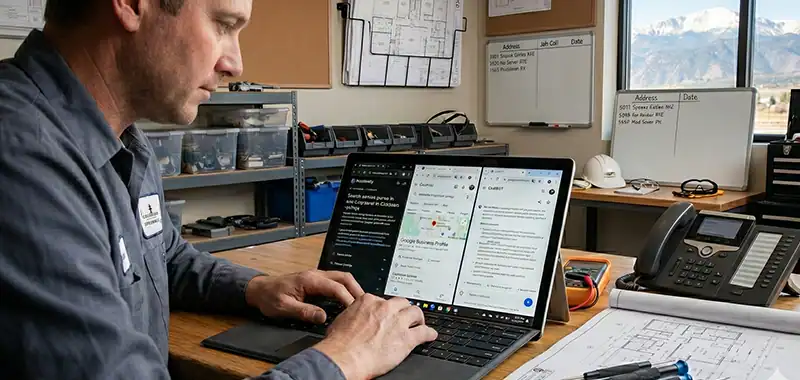
Today, people ask full questions to AI‑powered tools — ChatGPT, Google’s AI Overviews, Perplexity, and Gemini. Instead of typing “chiropractor Colorado Springs,” they ask, “Who’s the best chiropractor in Colorado Springs for chronic lower back pain?”
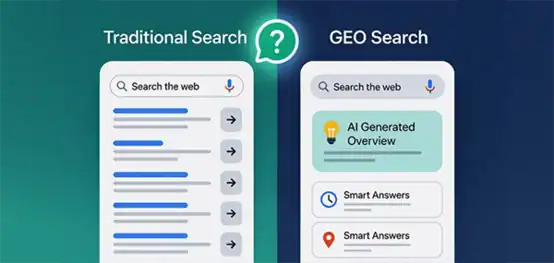
The AI writes an answer. It chooses sources it considers credible, synthesizes them, and delivers a recommendation — often without the user clicking a website.
Analysts and measurement firms are tracking the shift. Similarweb’s 2025 Generative AI report shows rising “AI discovery” and introduces brand‑visibility estimates from LLM sources like ChatGPT, Gemini, Perplexity, and Copilot. Similar studies and field tests also note click declines when Google’s AI Overviews appear, though magnitudes vary by query and methodology.
Consumer behavior is moving with it. In a 2024 consumer survey, Botify reported that a strong majority plan to use AI‑powered search in the coming year and many already trust results from generative AI platforms.
What Is GEO?
GEO stands for Generative Engine Optimization.
Coined by Princeton researchers in 2023, GEO is the practice of optimizing your content and online presence so AI‑driven platforms can find, understand, trust, and cite your business when generating answers.
Our GEO services page goes deeper on what this looks like in practice for Colorado Springs small businesses.
- Traditional SEO tries to place your link in a list of results.
- GEO aims to place your business inside the AI’s answer — as the recommended provider or cited expert.
AI platforms don’t automatically favor big brands. They prioritize quality, relevance, and credibility. A well‑optimized Colorado Springs business can outrank national chains in AI‑generated local answers.
Why Does GEO Matter in Colorado Springs?
Colorado Springs is competitive and growing. New businesses launch every month, and some are already appearing in AI answers while others aren’t.
- Early‑mover advantage: Many brands still lack a formal GEO strategy, creating a window to establish authority before competition tightens.
- Hyper‑local relevance wins: AI assistants excel at geographic specificity. Neighborhoods (Broadmoor, Briargate, Old Colorado City), landmarks (the Pikes Peak region), and zip codes are assets in GEO, not afterthoughts.
Example queries your prospects are already asking:
- “Best local marketing agency in Colorado Springs for a new boutique?”
- “Who does Google Business Profile optimization near me in Briargate?”
- “Which Colorado Springs dentist is great with anxious patients?”
If you’re not optimized for these answer‑style queries, you won’t be mentioned — even if your service is excellent.

How Does GEO Work? (No Jargon)
AI systems decide who to cite using signals you can control:
1. Credibility signals across the web
Google Business Profile, Yelp, BBB, Chamber of Commerce, local press, LinkedIn, industry directories, and consistent NAP (name, address, phone). These corroborate your legitimacy and expertise. See Google’s guidance on representing your business for what accurate, complete information looks like.
2. Content that directly answers questions
Create pages, blog posts, and FAQs that mirror real customer questions in full sentences with specific detail, examples, and local context. Google’s documentation on helpful content and page experience remains a useful compass.
3. Demonstrated expertise, experience, authority, and trust (E‑E‑A‑T)
Show practitioner credentials, author bios, years in market, case studies, testimonials, and transparent policies. While E‑E‑A‑T is not a single “score,” Google’s quality rater guidelines explain what trustworthy content looks like.
4. Structured, machine‑readable content
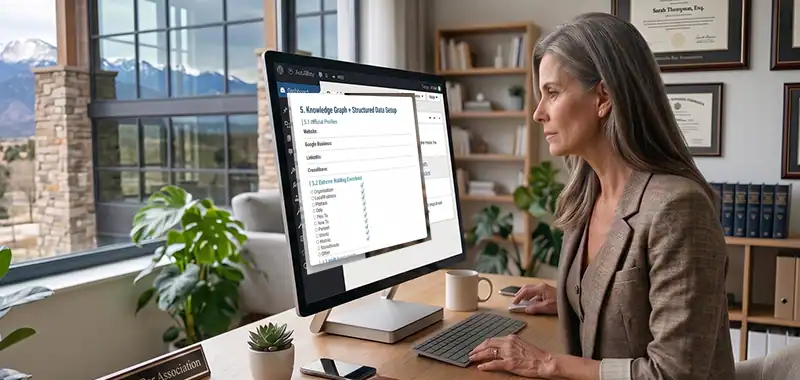
Use schema markup so machines can interpret your content reliably. High‑value types for local businesses include Organization, LocalBusiness (or subtype), Service, FAQPage, Review, and Article. Validate your markup with Google’s Rich Results Test. This is one of the areas our Technical SEO services handle directly — so you don’t have to become a developer to get it done right.
Does GEO Replace SEO?
No, GEO does not replace SEO – it enhances it.
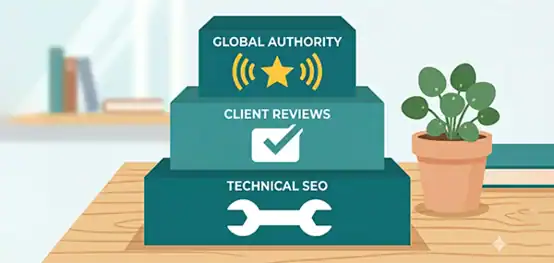
Think of a three‑layer stack:
- SEO — The foundation: Technical health, site structure, page speed, internal linking, and on‑page optimization. Google’s SEO Starter Guide is a solid reference. If your technical foundation has gaps, our free SEO audit is a good place to start.
- AEO (Answer Engine Optimization): Formatting content for direct answers — clear headings, FAQs, definitions, and concise summaries. See how our AEO services structure your content so AI tools choose you as a trusted source.
- GEO — The authority/citation layer: Aligning your entity data, credibility signals, and structured content so AI assistants recognize and reference you. The discipline was formally defined in Princeton’s foundational GEO research and is the core of our AI Search Optimization practice.
If your SEO basics are wobbly, fix those first. If they’re solid, GEO is your highest‑leverage upgrade in 2026.
How do I get started with GEO? (Practical, Low‑Lift Steps)
Audit your Google Business Profile
Ensure every field is complete and locally rich: categories, services with descriptions, service areas, hours, attributes, products, photos, Q&A, and posts. Add fresh, relevant photos monthly. Our Google Business Profile Optimization service covers all of this — and keeps it current so you don’t have to think about it.
Fix and expand your directory listings
Claim and standardize NAP (Name, Address, Phone Number) across Yelp, BBB, Chamber, Nextdoor, Apple Business Connect, Bing Places, Facebook, and niche directories. This is a core part of our Local SEO services.
Add or expand an FAQ hub
Publish an FAQ page per core service and a master FAQ for broader questions. Write questions in customer language; answer in 2–5 sentences; link to deeper resources. Mark up with FAQPage schema so AI systems can extract and cite your answers directly.
Create local answer content
Think: “What to look for in an SEO agency in Colorado Springs,” “How to get your business to show up in AI answers,” or “Colorado Springs Google Business Profile checklist [2026].” Incorporate neighborhood references, seasonal context, and local examples. Support claims with outbound citations where relevant.
Strengthen E‑E‑A‑T
Add author bylines with bios, showcase case studies with measurable outcomes, embed verified reviews, and include outbound citations to recognized standards or associations.
Implement structured data
Add Organization, LocalBusiness, Service, FAQPage, Review, and Article schema to your key pages. Our Technical SEO team handles schema implementation and validation — and keeps it current as your services evolve.
Test your AI visibility monthly
Ask ChatGPT, Perplexity, and Gemini: “Who are the best [your service] providers in Colorado Springs?” Note who appears, which sources are cited, and the language used — then let that guide your content strategy.
Optional but high‑impact
- Publish original data (surveys, checklists, price guides) others may cite.
- Earn local press mentions and sponsor community events — then publish recap posts with photos and links.
- Maintain a media kit or about page clarifying your entity details (legal name, DBA, address, leadership, certifications).
Frequently Asked Questions About GEO
Is GEO just the new SEO?
No. SEO is still essential. GEO builds on it to ensure AI assistants can understand and cite your business directly in their answers. If you’re not sure where your site stands on the SEO basics, our free website audit will show you exactly what needs attention.
How long does GEO take to show results?
Expect early signals in 4–8 weeks (e.g., more brand mentions in AI answers), with compounding gains over 3–6 months as content and citations accrue. Results vary by niche and authority.
Do I need developer support?
Basic GEO steps — GBP, directories, FAQs — require no code. Structured data and entity hygiene benefit from light technical help, which is exactly what our Technical SEO service is designed to provide.
What does a GEO engagement with Just Ducky Digital actually look like?
Every engagement starts with a free AI search audit. From there, we build a strategy tailored to your business, budget, and goals — no cookie-cutter packages. See our FAQ page for more on what to expect.
The Bottom Line
AI‑powered search is already influencing how Colorado Springs customers choose local providers. GEO isn’t about gaming algorithms — it’s about being the clearest, most credible local answer. If you want to see where you stand, request a free AI search audit. We’ll show you exactly how to start showing up in AI answers.
— Carrie O’Hara, Founder, Just Ducky Digital
[email protected] | (719) 761‑5131